Wildfire smoke and air quality: why U.S. cities far from any fire get hazardous air
Airleaf research team · · 6 min read
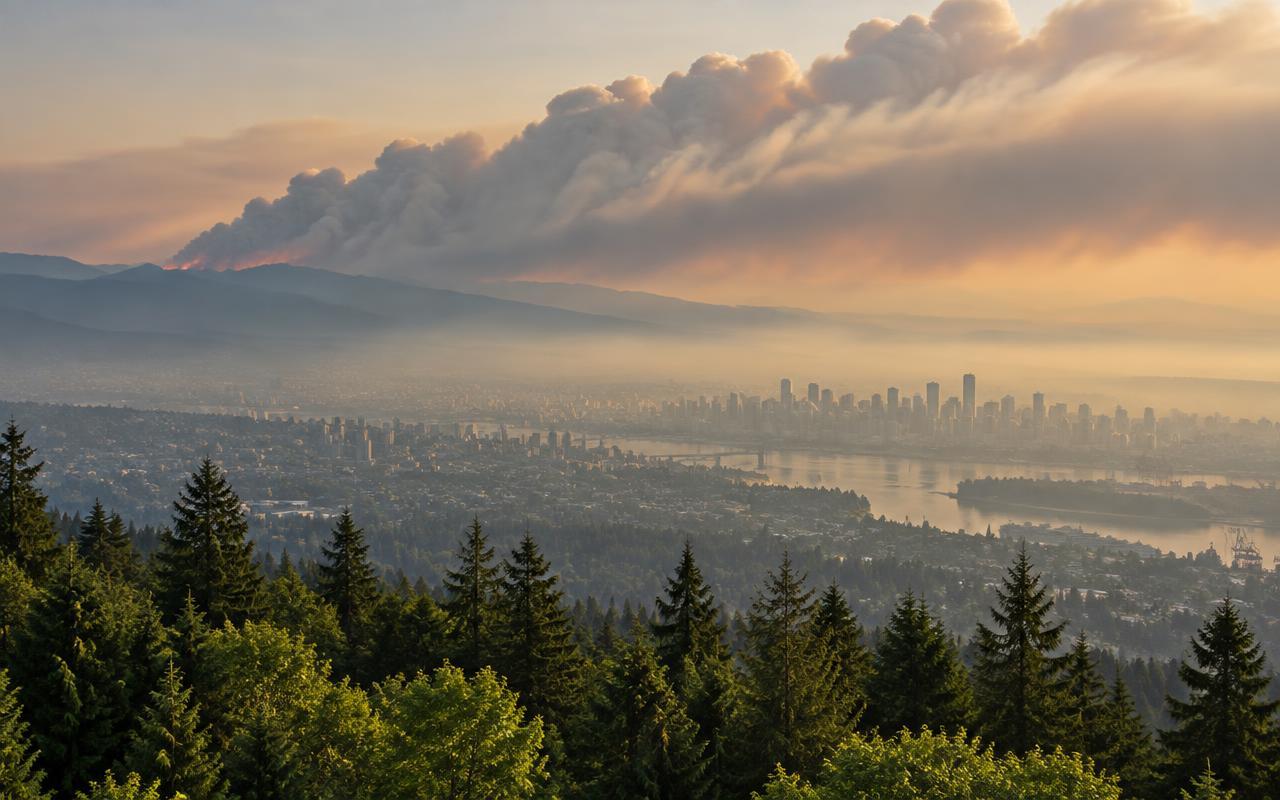
In 2023, smoke from wildfires burning in Quebec turned New York's skyline orange and gave it the worst air quality of any major city on Earth for a stretch — over a thousand miles from the nearest fire. That's the part people underestimate about wildfire smoke: it doesn't stay local.
Smoke doesn't stay local
Large fires inject smoke high enough to be caught by the jet stream, which can carry fine particles thousands of miles in a matter of days. That's how Canadian wildfire smoke reached the U.S. Northeast and Midwest in 2023, and how smoke from California and Pacific Northwest fires regularly drifts into cities like Seattle, Portland and the Bay Area with no fire risk of their own.
Why wildfire PM2.5 is especially harmful
Wildfire smoke is overwhelmingly fine particulate matter (PM2.5), and research comparing it with typical urban pollution has found wildfire-sourced PM2.5 to be associated with disproportionately higher respiratory health impacts per microgram than the same pollutant from everyday traffic or industrial sources. It's also a spike, not a baseline — bodies and cities are less adapted to sudden extreme exposure than to a chronic, lower-level load.
How to protect yourself during a smoke event
The EPA's AirNow.gov is the standard U.S. reference for real-time AQI and smoke plume tracking during an event:
- Check AirNow.gov or your local AQI before any outdoor activity — smoke events can shift a "Good" reading to "Hazardous" within hours
- Keep windows and doors closed, and run a HEPA air purifier indoors if you have one
- Wear a properly fitted N95 (not a cloth or surgical mask) if you must be outside for any length of time
- Avoid outdoor exercise entirely during a smoke event — exertion multiplies how much polluted air you inhale
Can trees help?
Not with an acute smoke event moving through at speed — no amount of canopy stops a plume travelling on the jet stream. Where tree cover genuinely helps is the baseline it's already working on every other day: healthy canopy measurably filters ambient particulate pollution and lowers the heat that makes fire seasons longer and more intense in the first place. It's a long-game fix layered under a short-game problem, not a substitute for checking AQI when smoke rolls in.
Put it into practice
See how many trees your own street has and how clean its air is.
Check my area →