City report · Croatia
Zagreb Air quality today
Air quality in Zagreb currently reads AQI 117 (Unhealthy for sensitive groups): Sensitive groups should limit long or intense outdoor activity.
AQI 117
Air quality right now
Unhealthy for sensitive groups
- PM2.5, fine particles (µg/m³)
- 41.8
- tree cover
- 33.3%
- trees in this area
- 105K
- more trees needed
- 5.3K
Measured across a 2 km radius around Kaptol, 10000, Gornji Grad - Medveščak, Zagreb, Croatia (12.57 km²), from a satellite image of Sep 16, 2026. Lower AQI is better: 0–50 is Good, above 300 is Hazardous.
Zagreb · AQI 117 (Unhealthy for sensitive groups)
Zagreb's tree count comes to 104,615 trees across 12.57 km², 2 points below the 35% tree-cover level considered healthy for this area, so roughly 5,341 more trees would close the gap.
Air quality detail
Air quality in Zagreb today: AQI 117, Unhealthy for sensitive groups
Main pollutant: PM2.5 · Observed Nov 11, 17:00 local time via OpenAQ ground stations, US EPA index. Values in µg/m³.
Ground station · Zagreb, Ljudevita Posavskog, 1.5 km away · median of 5 stations
Health signal
Sensitive groups should limit long or intense outdoor activity.
PM2.5
41.8
PM10
—
NO₂
—
O₃
—
SO₂
—
CO
—
Data: OpenAQ · AirGradient, Dts, Antun, AirSync
- Outdoor exercise
- Children, older adults and people with asthma or heart disease should cut down long or hard exercise
- Windows
- Close them to keep the outside air out
- Mask
- Sensitive groups: an N95 outdoors
- Air purifier
- Run one, especially in bedrooms
Over the last 7 days, the CAMS air-quality model put Zagreb's daily AQI at 87 on average, from 71 on Nov 4 to an hourly peak of 157 on Nov 8.
Where Zagreb stands: the most polluted cities in the world right now · the cleanest
Tree cover detail
Tree cover in Zagreb: Below target
33.3% tree cover against a 35% healthy-neighborhood target, across 12.57 km².
Trees in this area
104,615
Target trees
109,956
More trees needed
5,341
CO₂ if planted / yr
117.5 t
Deforestation · 2001–2025
How much forest has Zagreb lost?
Since 2001, the area within 10 km of Zagreb has lost about 158 hectares of forest (about 220 football pitches): 1.9% of the forest it had in 2000. Most of it was lost to logging, so much of it can grow back. About 29 hectares (18%) was deforestation: forest cleared for good for farms, mines or towns.
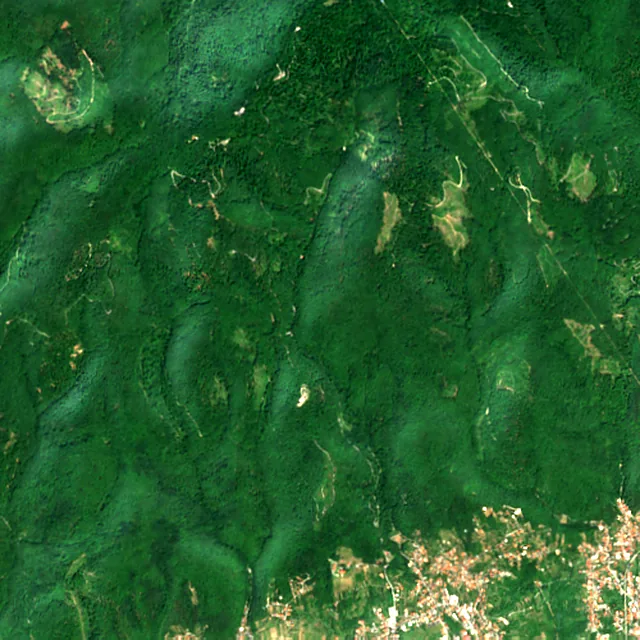
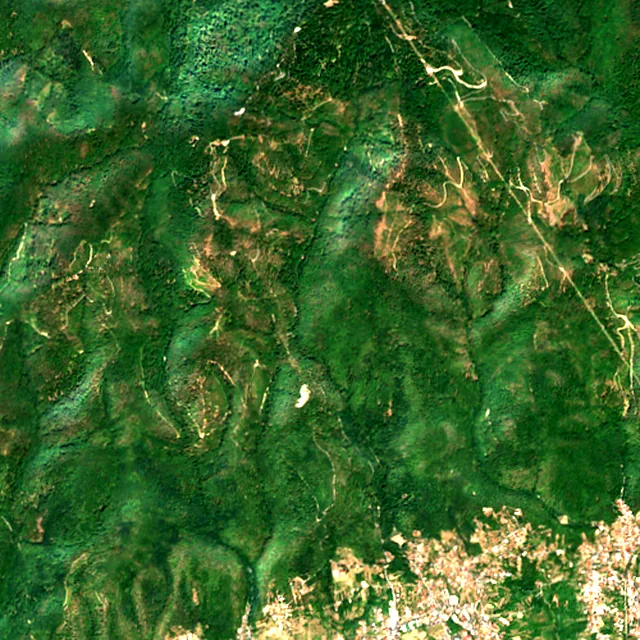

2017: satellite photo from August 2017 of a 5 × 5 km area about 7 km north of the city center.
- Forest lost since 2001
- 158 haabout 220 football pitches
- Share of its forest
- 1.9%of what there was in 2000
- Cleared for good
- 29 hadeforestation: turned into farms, mines or towns
The worst year was 2014, when about 37 hectares of forest were lost.
Hectares of forest lost each year
Show the figures as a table
| Year | Cleared for good | Can grow back | Total |
|---|---|---|---|
| 2001 | under 1 ha | 3 ha | 3 ha |
| 2002 | under 1 ha | under 1 ha | 1 ha |
| 2003 | under 1 ha | under 1 ha | under 1 ha |
| 2004 | under 1 ha | 4 ha | 5 ha |
| 2005 | under 1 ha | 1 ha | 2 ha |
| 2006 | under 1 ha | 2 ha | 2 ha |
| 2007 | 1 ha | 9 ha | 10 ha |
| 2008 | 2 ha | 8 ha | 9 ha |
| 2009 | 2 ha | 3 ha | 5 ha |
| 2010 | 2 ha | 2 ha | 4 ha |
| 2011 | 2 ha | under 1 ha | 3 ha |
| 2012 | 2 ha | 3 ha | 5 ha |
| 2013 | under 1 ha | under 1 ha | under 1 ha |
| 2014 | under 1 ha | 37 ha | 37 ha |
| 2015 | under 1 ha | under 1 ha | under 1 ha |
| 2016 | 6 ha | 10 ha | 16 ha |
| 2017 | 2 ha | 16 ha | 18 ha |
| 2018 | under 1 ha | 3 ha | 3 ha |
| 2019 | under 1 ha | 11 ha | 11 ha |
| 2020 | under 1 ha | under 1 ha | under 1 ha |
| 2021 | under 1 ha | under 1 ha | 1 ha |
| 2022 | under 1 ha | 2 ha | 2 ha |
| 2023 | 1 ha | 4 ha | 5 ha |
| 2024 | 5 ha | under 1 ha | 5 ha |
| 2025 | 3 ha | 6 ha | 9 ha |
What is causing deforestation around Zagreb?
- Loggingcan grow back74% · 116 ha
- Towns and roadscleared for good13% · 20 ha
- Farms, pasture and plantationscleared for good5.4% · 9 ha
Also: unknown causes.
Causes for 2025 are estimates, based on what caused forest loss in the same places up to 2024.
Forest gained and lost, 2000–2020
- Forest in 2000
- 10,000 ha
- Forest in 2020
- 10,100 ha
- Overall change
- +108 hamore forest than in 2000
Comparing satellite maps from 2000 and 2020, the forest around Zagreb stayed about the same size, at about 10,100 hectares: new forest grew on about 255 hectares, and about 147 hectares were lost.
These 2000 and 2020 maps, from the University of Maryland, count any land with trees taller than 5 m as forest, including plantations and orchards. Forest that was cut or burned and had grown back by 2020 counts in both years, so the loss here is smaller than the yearly figures.
These figures cover everything within 10 km of the city center, a wider area than the report above, because forest is usually lost at a city's edges.
Source: Hansen/UMD/Google/USGS/NASA, Global Forest Change (GFC-2025-v1.13); causes: WRI/Google DeepMind drivers of forest loss; both CC BY 4.0, summed by Airleaf for each area. Forest gained and lost 2000–2020: Potapov et al. 2022, UMD GLAD Global Land Cover and Land Use Change, CC BY 4.0. Images: contains modified Copernicus Sentinel data. How it's measured
In the same region
Measured cities near Zagreb
Same 2 km radius, same index — so they compare directly.
- Novo Mesto62.7 km
Slovenia
- Tree cover
- 41%
- Air quality
- 54
- Celje72.2 km
Slovenia
- Tree cover
- 44%
- Air quality
- 44
- Maribor86.3 km
Slovenia
- Tree cover
- 27%
- Air quality
- 59
- Ljubljana116.9 km
Slovenia
- Tree cover
- 38%
- Air quality
- 69
- Graz145.2 km
Austria
- Tree cover
- 28%
- Air quality
- 67
Also compared:Zagreb vs SplitZagreb vs Osijek
Build your own
Compare Zagreb with anywhere
This place
Zagreb
Use this data
Put Zagreb's numbers on your site
Free to embed. Updates itself as the measurement refreshes.

Frequently asked
Questions about Zagreb
What is the air quality (AQI) in Zagreb right now?
The latest reading for Zagreb shows an AQI of 117 (Unhealthy for sensitive groups), measured Nov 11, 17:00 local time by 5 ground monitoring stations via OpenAQ (the median of their readings; the nearest is Zagreb, Ljudevita Posavskog, 1.5 km away). The main pollutant is PM2.5. Sensitive groups should limit long or intense outdoor activity.
Is it safe to exercise outside in Zagreb today?
At AQI 117 (Unhealthy for sensitive groups): children, older adults and people with asthma or heart disease should cut down long or hard exercise. Windows: close them to keep the outside air out. Masks: sensitive groups: an N95 outdoors. The reading changes through the day, so check again before a long run or ride.
What has the air quality in Zagreb been like this week?
Over the last 7 days, the CAMS air-quality model put Zagreb's daily AQI at 87 on average, from 71 on Nov 4 to an hourly peak of 157 on Nov 8. On 1 of those days the average was above 100, unhealthy for sensitive groups.
How much forest has the area around Zagreb lost since 2001?
Since 2001, the area within 10 km of Zagreb has lost about 158 hectares of forest (about 220 football pitches): 1.9% of the forest it had in 2000. Most of it was lost to logging, so much of it can grow back. About 29 hectares (18%) was deforestation: forest cleared for good for farms, mines or towns. Comparing satellite maps from 2000 and 2020, the forest around Zagreb stayed about the same size, at about 10,100 hectares: new forest grew on about 255 hectares, and about 147 hectares were lost.
What is the tree count in Zagreb?
Zagreb has an estimated 104,615 trees across the 12.57 km² measured — 33.3% tree cover, 2 percentage points short of the 35% tree-cover target set for this area.
How many more trees does Zagreb need?
Zagreb needs roughly 5,341 more trees to close a 2-point shortfall against its 35% tree-cover target — about 117.5 t of extra CO₂ absorbed per year once grown.
How are Zagreb's air quality and tree cover measured?
Air quality is measured by ground monitoring stations near Kaptol, via OpenAQ; the 7-day trend is the Open-Meteo / CAMS model's estimate. Tree cover is measured from Sentinel-2 L2A (ESA Copernicus) via Earth Search satellite imagery at 10 m detail across a 2 km radius around Kaptol; the tree count is an estimate derived from that cover.
See your own area
What does your neighborhood look like?
Pick any point and radius to get the same air-quality and tree-cover breakdown.
Check my address